
Rodent-Only Focus
We do not split attention across ants, roaches and termites. The plan is built around how roof rats and house mice behave in St. Augustine homes.

Roof rats, known here as palm rats, nest in palm fronds and live oaks, feed on citrus, and slip in through gaps in tile roofs and historic homes. Our own team inspects, traps, seals and cleans up across St. Augustine, ZIPs 32080, 32084, 32086, 32092 and 32095.
St. Augustine gives roof rats everything they need. Live oaks and sabal palms offer high nesting spots and a highway of branches to the roofline. Citrus and fruit trees feed them for much of the year. Barrel tile roofs hide sheltered runways and nesting pockets right at the roofline. Warm weather keeps them active all year, and the pressure never really stops.
Most infestations follow the same pattern: a roof rat, known here as a palm rat, travels along a branch, fence or utility line to the roof, then slips in through a soffit, an attic vent or a gap where wires and pipes go in. Once inside, it leaves scent trails that draw more animals, and chews wiring, wood and insulation. Rat control in St. Augustine and mice control in St. Augustine both work the same way. As your rodent exterminator in St. Augustine, we remove the animals inside, then close the gaps with rodent inspection and exclusion.
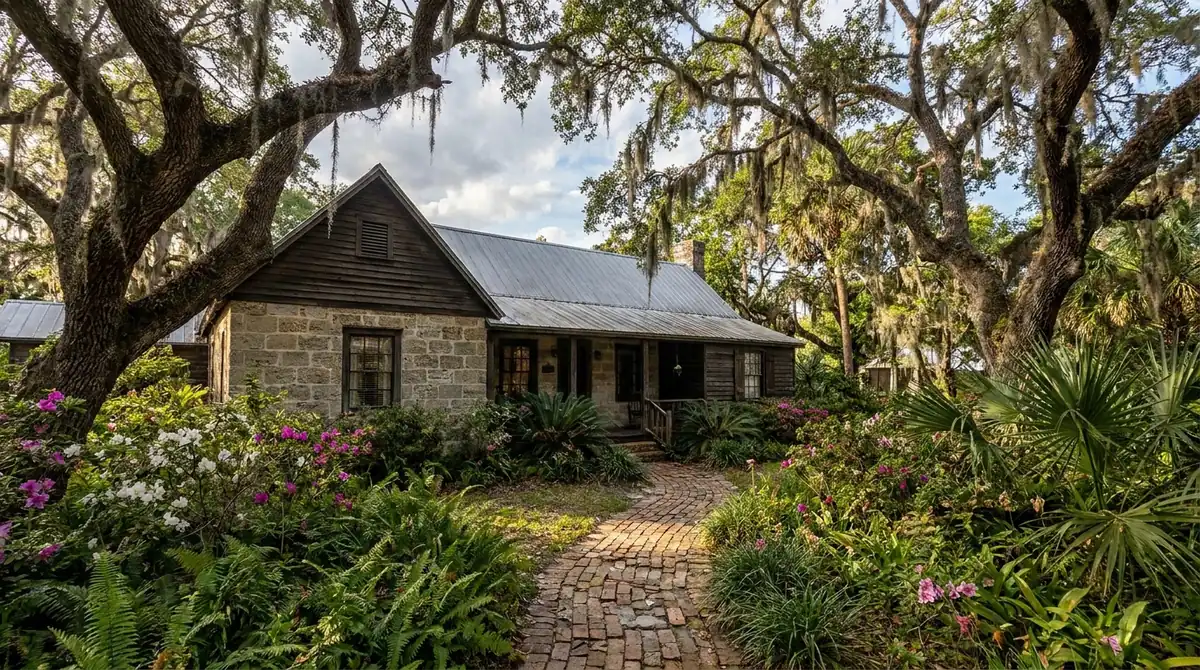
We do not split attention across ants, roaches and termites. The plan is built around how roof rats and house mice behave in St. Augustine homes.
Trapping alone never lasts. Rodent-proofing means sealing every gap a quarter inch and wider with steel mesh, sheet metal, mortar or copper mesh, then checking the seals again.
Entry points are photographed and shown to you, and the work is explained in plain language first.
Every service below has its own page with full detail. Pick the one that matches what you are seeing, or call and describe it.

Roof rats and Norway rats trapped and sealed out. We find where they enter, tile roofs, palm fronds and gaps at the eaves, remove the animals, then seal every opening with steel mesh so they cannot come back.
View Details
House mice in kitchens, attics and walls. We trap the mice, find the quarter-inch gaps they use, and seal them with steel mesh and caulk, so a few mice do not become a whole colony.
View Details
Every gap found, then sealed with steel mesh. Our technician walks the whole house, roofline, vents, foundation and pipes, photographs each opening, and seals it so rats and mice stay outside for good.
View Details
Snap and live traps, plus bait stations outside. We place traps where the animals actually travel, check them on a set schedule, and remove every animal safely and discreetly.
View Details
A rat or mouse in your living space right now. Call us and we will arrange a fast inspection. We trap the animal, check for more, and seal the entry point so it does not happen again.
View Details
Droppings removed, space sanitised and deodorised. We clear contaminated insulation and droppings, disinfect the area, and fit fresh insulation where it is needed.
View Details
Dead animals removed safely, smell treated. We locate the animal, in a wall, attic or crawl space, remove it without opening up your home more than needed, and treat the smell at the source.
View Details
Offices, restaurants and shops, around your schedule. We work outside your opening hours, keep the visit discreet, and give you a written report your health inspector will accept.
View Details
Rental homes and managed communities, coordinated visits. One call covers the whole property. We schedule with tenants, report to you, and keep every unit on the same prevention plan.
View Details
Seasonal checks that catch new gaps early. We visit through the year, re-check every seal, trim back the branches and palms that give rats a route, and stop a small gap becoming an infestation.
View DetailsWalk your home with this list. Two or more signs usually mean animals are nesting, not just passing through.
Do not seal the house shut yet. Trapped animals can die in the walls. Call and describe what you found.
Call (904) 533-7109Most pest companies treat rodents as one item on a long list; we treat rodents as the whole job.
| What Matters | St Augustine Rodent Guard | Typical General Pest Company |
|---|---|---|
| Focus | Rodents only: roof rats, Norway rats and house mice | One of many pests treated |
| First Step | Full inspection finds every entry point | Spray or bait box first, rodents second |
| Materials | Steel mesh, sheet metal, mortar and copper mesh | Often foam or plastic mesh |
| After the Visit | Photo report and a follow-up seal check | Verbal summary, no photos |
| Local Knowledge | St. Augustine palms, citrus, tile roofs and historic homes | Same plan, any city |
Tell us what you have seen or heard, and where.
The attic, crawl space, garage and roofline are walked, and every entry point is photographed.
Snap and live traps go on the animals' routes; bait stations go outside.
Gaps a quarter inch and wider are sealed with steel mesh, sheet metal, mortar or copper mesh.
Droppings and damaged insulation are removed, and the space is sanitised.
Traps are checked and the seals looked at again to confirm the fix is holding.
Day ranges are typical for a light infestation; a settled colony can take longer, and the inspection will tell you. Our own technicians do the work: inspection, trapping, sealing and cleanup, and explain the plan in plain language before we begin. See our About Page to learn more about our team.

Breeding picks up, and roof rats look for nesting material in attics and palm fronds. Check the garage and attic early, and look for hollowed citrus left from winter.

Warm weather keeps roof rats active in palms and live oaks all summer, and they run along branches and utility lines onto tile roofs. Heavy rain can push ground animals up into garages and wall voids.

Citrus ripens and cooler nights arrive, and roof rats move indoors. October is when homeowners first notice them, in attics and upper walls, and exclusion work is best done before the move.

Indoor peak. Animals that got in during fall settle into attics and crawl spaces, and scratching in the ceiling at night is often the first sign. Storms and flooding can also push rodents in after heavy rain.
One tenant complaint about scratching or droppings can mean an emergency call and a lease dispute. Property Management and HOA Solutions are built for that: visits are planned around tenants, work is kept quiet and tidy, and you get a written record of what was found. For restaurants, offices and shops, see Commercial Rodent Control.
Between tenants is the best time to seal a property. Entry points are closed before the next lease begins, so the next tenant never hears the scratching.
We serve the whole of St. Augustine, FL, ZIP codes 32080, 32084, 32086, 32092 and 32095, from Historic Downtown to Fullerwood, and each area below has its own page.
The oldest city core, coquina homes and St. George Street.
Historic frame cottages south of the plaza.
San Marco Avenue corridor north of downtown.
Live oaks, marsh edges and the yacht harbour.
1920s-50s homes across the Bridge of Lions.
Coastal homes by the lighthouse and the beach.
King Street and CR 214, west to I-95.
Established streets close to the city core.
When you call St Augustine Rodent Guard, you talk to our local team. Our own technicians come to your home, inspect the attic, crawl space and roofline, and explain the plan in plain language before any work begins. We trap and remove the animals, seal the entry points with steel mesh, and clean up the mess. Then we come back to check the seals are holding. Our office is at 190 Allgood Cir #109, St. Augustine, and we serve St. Augustine homes only.
Describe what you have seen or heard, and where.
Our technicians inspect your home and explain the plan.
We do the work ourselves, then check the seals again.
Five small things make the call far more useful: where you heard or saw the animals, and when; whether you have found droppings, and where; whether they are in the attic, walls, crawl space or living space; whether you have pets or children at home; and your address and a gate code if one is needed.
Call (904) 533-7109Practical guides from our St. Augustine team: how to spot roof rats, tell them apart, and keep them out for good.

November 2026
Slender climber or stocky burrower? Size, droppings, sounds and nesting spots give them away.
Read the Guide →
November 2026
Hollowed citrus, palm frond skirts, attic scratching and greasy rub marks: the signs that usually mean a nest.
Read the Guide →
November 2026
A palm rat is a roof rat that nests in palm fronds. Why palms attract them, and how to cut the risk.
Read the Guide →Droppings in pantries and garages, scratching in the attic or walls at night, gnaw marks on wiring, shredded insulation, hollowed citrus on the tree and a musky smell. Two or more signs usually mean a nest.
Exclusion, also called rodent-proofing, seals every gap a quarter inch and wider with steel mesh, sheet metal, mortar or copper mesh. Trapping removes the animals inside; exclusion keeps the next ones out.
Yes. Roof rats are the most common rat in Florida, and St. Augustine gives them live oaks, palm trees, citrus and tile roofs. They climb branches, fences and utility lines to reach the roofline, then enter through soffits, attic vents and gaps where wires and pipes go in.
A palm rat is a roof rat that nests in palm fronds. The dead frond skirt on an untrimmed palm is close to ideal nesting habitat, so palms close to the house often mean roof rats in the attic.
Call for help and do not seal the attic shut first, or animals can die inside the walls. Note when the sounds happen and where, and whether you have also seen droppings or gnaw marks.
Yes. They chew wiring, wood, pipes and insulation, and contaminate food with droppings and urine. Chewed wiring is a fire risk: rats gnaw through wire insulation, and exposed wires can short and start a fire. Droppings and urine can also carry diseases, including salmonella, leptospirosis and hantavirus, so droppings should never be swept or vacuumed dry. Roof rats also damage tile roofs and soffits as they chew their way in. Damage grows the longer it is left alone.
Yes. The animal is found in the wall void, attic or crawl space, removed safely, and the smell is treated at the source.
Our technician walks the attic, crawl space, garage and roofline, looks for droppings and nesting material, and finds the gaps used to get in. You then get a plain-language plan.
Seal the entry points, store food in sealed containers, clear clutter, trim palm fronds and branches that touch the roof, pick up fallen citrus, and check the seals each fall before the October indoor move.
Historic Downtown, Lincolnville, Uptown, North City, Davis Shores, Anastasia Island, West St. Augustine and Fullerwood. ZIP codes 32080, 32084, 32086, 32092 and 32095.
“We heard scratching in the attic for weeks and kept putting it off. They walked the attic and the roofline, showed us every gap in photos, and sealed them with steel mesh. The house has been quiet since.”
Sarah M.Historic Downtown
“They explained everything before they started and gave us a written plan, so we knew what would happen and in what order. The work was tidy and the attic looks clean again.”
James K.Davis Shores
“Roof rats were in our palms and getting into the attic through the tile roof. They trimmed the fronds back, sealed the gaps, and set traps. We have not heard a sound since.”
Priya R.Anastasia Island
Call us and tell us where you are in St. Augustine. Our office is on Allgood Circle in St. Augustine, and our technicians serve homes across the city, from Lincolnville to Davis Shores and from Uptown to West St. Augustine.
Our office: 190 Allgood Cir #109, St. Augustine, FL 32086 · Get Directions
Tell us what you have seen or heard, and our team will come to your St. Augustine home.
(904) 533-7109